
Tech Layoffs, Eastside Real Estate, and What High-Net-Worth Buyers Need to Know
The headlines have been alarming. Tech layoffs. Economic uncertainty. The word "recession" floating around again. If you are a high-net-worth buyer or seller trying to make a major real estate decision on the Eastside right now, you deserve a straight answer — not just a calming platitude.
Here is mine: the Eastside real estate market is not immune to the tech shakeout. But it is better positioned than almost anywhere else in America to weather it — and here is exactly why.
What the Headlines Are Getting Wrong
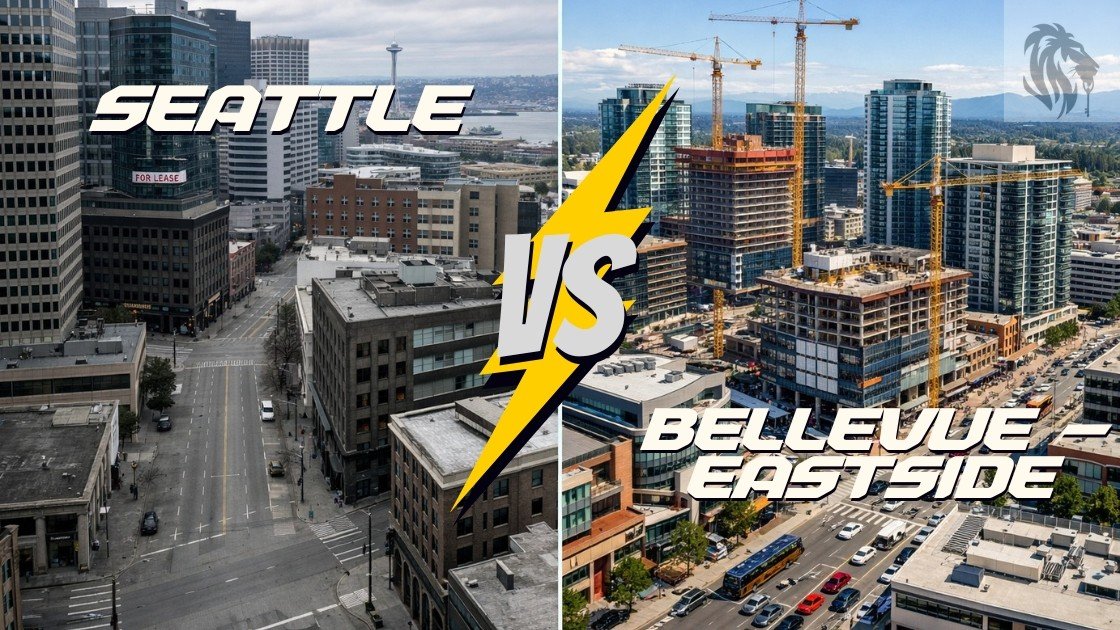
The Seattle tech layoff story is real. But it is being told as one story when it is actually two very different stories happening simultaneously — separated by a single body of water.
| SEATTLE — West of the Lake | EASTSIDE / BELLEVUE — East of the Lake |
|---|---|
| Downtown office vacancy: 34.7% (record high, CBRE Q4 2025) | Downtown vacancy: 25.4% — and actively filling |
| Amazon exiting multiple Seattle buildings | Amazon actively building toward 25,000 Bellevue employees |
| Tech companies choosing NOT to renew leases | AI companies racing to sign new Bellevue leases |
| High taxes, employer exits, record vacancies | Business-friendly, clean, safe — employers choosing Bellevue over Seattle |
One executive recently put it plainly: Seattle's tax structure has employers relocating workers to the Eastside. That is not speculation — it is showing up in lease signings, permit filings, and headcount data.
The Companies Expanding on the Eastside Right Now
While the layoff news dominates the front page, here is what is happening on the ground in Bellevue, Redmond, and the broader Eastside. This is the data your financial advisor is not showing you — but your real estate advisor should be.
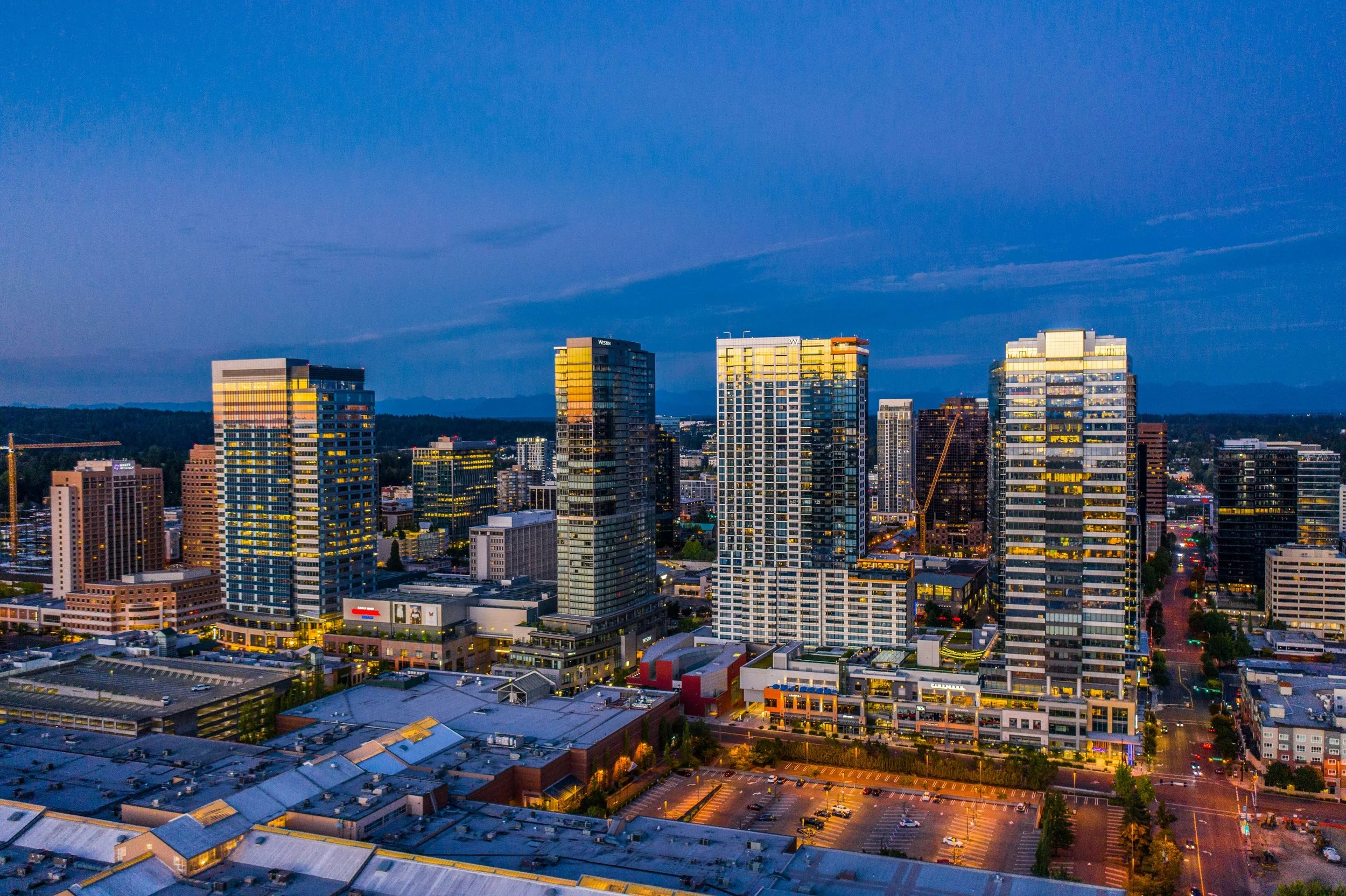
| Company | Eastside Activity | Key Data Point |
|---|---|---|
| Amazon | Building Bellevue HQ | Grew from 2,790 to 14,300 Bellevue employees. Long-term target: 25,000. Restarting tower buildouts including The Artise (25 stories, $80M permit) and Bellevue 600. Construction never stopped despite layoffs. |
| Microsoft | Redmond campus, RTO mandate | Enforcing return-to-office policies, anchoring Eastside talent base. CEO Satya Nadella committed to headcount growth — especially AI roles — with focus on leveraging technology. |
| OpenAI | Bellevue — opened March 5, 2026 | Signed 10 floors at City Center Plaza — 296,000 sq ft total. Capacity for up to 1,400 employees. Headcount grew 78% in 4 months. Ribbon cutting March 5, 2026, attended by Governor Bob Ferguson. |
| xAI (Elon Musk) | New Bellevue presence — Lincoln Square South | Filed permits with City of Bellevue for Lincoln Square South. Chose Bellevue specifically for proximity to Microsoft and Amazon AI infrastructure. |
| Databricks | Downtown Bellevue — new tower | Filling major space in Bellevue's newest office tower alongside Uber. One of the fastest-growing enterprise AI companies globally. |
| Snowflake | Bellevue Spring District | Subleased an entire Bellevue building from Meta in the Spring District. Moved hundreds of employees to the Eastside. Chose Bellevue over Seattle. |
| Anduril | New Bellevue lease | Defense-tech company signed a new Bellevue lease as part of a broader wave of non-traditional tech sectors choosing the Eastside for its business-friendly environment. |
| Snap | Expanded Bellevue lease | Social media company expanded Eastside presence, joining the growing list of firms choosing Bellevue over downtown Seattle. |
| TikTok | Moved to Bellevue | Chose Bellevue specifically — did not choose downtown Seattle. Part of the larger employer migration driven by taxes, safety, and talent access. |
| UiPath | Lincoln Square North — Bellevue | AI and robotic automation company took two floors of former Microsoft office space in Lincoln Square North. Growing AI presence on the Eastside. |
| Shopify | New Eastside lease | Canadian e-commerce giant chose Bellevue for Pacific Northwest expansion. Part of the confirmed trend of new-to-market entrants choosing Eastside over Seattle. |
| Nvidia | Redmond campus presence | One of the most valuable companies in the world holds a confirmed presence in Redmond per permit records. Proximity to Microsoft is a key driver. |
Why Eastside Luxury Real Estate Is Structurally Different
I have been advising high-net-worth buyers and sellers on the Eastside for 25 years. I have seen the dot-com crash. The 2008 recession. The COVID boom. Each time, the market asked: is this time different? Here is what I have learned about why the Eastside holds up when other markets do not.
- Supply is permanently constrained. Bellevue, Mercer Island, Clyde Hill, and Medina are built out. There is no meaningful undeveloped land left in the most desirable neighborhoods. When demand softens slightly, supply does not spike — because it cannot. That structural scarcity is a floor under prices.
- The income base is exceptional. Even with layoffs, median earnings for King County tech workers reached $163,600 annually — far above any other employment category in the region. The workers who remain employed here are high earners with strong balance sheets and significant equity.
- Schools drive persistent demand. Bellevue School District, Lake Washington School District, and Mercer Island School District consistently rank among the top in the state. Families with children do not leave these school districts lightly — regardless of market conditions.
- The Eastside is insulated from Seattle's political risk. Seattle faces a $125–$140 million budget deficit with proposed expanded payroll taxes. Bellevue and the Eastside cities offer predictability. That matters enormously to employers — and to the buyers who follow them.
- Laid-off tech workers re-absorb quickly. The Seattle region's tech ecosystem is deep. Historically, laid-off workers in this market find new roles within weeks — often within the same companies or their competitors. That speed of re-employment keeps housing demand strong even through short-term uncertainty.
What This Means for Your Real Estate Decision Right Now
If You Are a Buyer
Your window is open. Here is why this matters specifically in a layoff environment:
- Sellers are more motivated. Some homeowners who work in tech are rethinking their financial picture. That psychological shift gives you negotiating leverage you did not have in 2021 or 2022.
- Competition has softened. With inventory up 36% year-over-year and some buyers pausing, frantic bidding wars have cooled. You can do inspections, add contingencies, and evaluate homes properly.
- The best neighborhoods are holding firm. Waterfront properties, Mercer Island estates, Clyde Hill, and Medina have not seen meaningful price drops. These are long-term wealth assets — and they are rarely in surplus.
- Rates at 6.1% are manageable for luxury buyers. For a well-qualified buyer with significant down payment and solid assets, 6.1% on a jumbo is not a barrier. It is the cost of entry into one of the most durable real estate markets in America.
If You Are a Seller
The conversation has changed — and you need a strategy that reflects that.
- The market still rewards the right home at the right price. Eastside luxury properties that are accurately priced and well-presented are still selling. The keyword is accurately.
- Overpricing is now fatal. With more inventory and more cautious buyers, a home launched $400K above market will sit. Every week on market hurts perceived value.
- Your equity story is powerful. If you bought your Eastside home before 2020, you have significant appreciation. That equity gives you flexibility to price competitively and still win.
- Now may be the right time to reposition. If you are thinking about downsizing, relocating, or diversifying your real estate holdings — spring gives you a window with motivated buyers actively searching.
My Honest Take After 25 Years
Here is what I tell every client who calls me worried about the layoff headlines:
Volatility creates opportunity. The buyers who acted in 2009 when everyone was scared made generational wealth. The buyers who waited for certainty missed it. I am not telling you the Eastside market is perfect or that there is no risk — there is always risk in real estate. What I am telling you is that Bellevue, Kirkland, Mercer Island, and the communities I have served for 25 years have structural advantages that do not show up in the headlines.
The companies choosing this market over Seattle. The schools your kids will attend. The supply that cannot expand. The incomes that remain among the highest in America. These are not abstractions — they are the foundation of durable real estate value.

Let's Talk
Whether you are a buyer trying to figure out if this is your moment, or a seller deciding whether to list before summer — I am here. No pressure. Just strategy.
Freddy Delgadillo
Judah Realty | Realogics Sotheby's International Realty
CLHMS | 25+ Years Eastside Luxury Specialist | 350+ Transactions
(425) 941-8688 | freddy@judahrealty.com | judahrealty.com
Frequently Asked Questions
Will tech layoffs cause Bellevue and Eastside home prices to drop?
Not significantly — and here is why. Bellevue's real estate market has structural protections that most markets do not: permanently constrained supply, one of the highest income bases in the country, top-ranked school districts, and a business-friendly environment that is actively attracting a new generation of AI and tech employers. While short-term buyer confidence may soften slightly, the Eastside avoided sharp price declines even during the 2022–2023 tech layoff cycle. The structural demand drivers remain firmly in place.
Which companies are growing on the Eastside despite the layoffs?
OpenAI opened its Bellevue office in March 2026 with capacity for 1,400 employees and 296,000 square feet at City Center Plaza. Amazon continues building toward its 25,000-employee Bellevue headquarters with multiple tower buildouts active. xAI (Elon Musk's AI company) filed permits for Lincoln Square South. Databricks, Snowflake, Nvidia (Redmond), Anduril, Snap, TikTok, UiPath, and Shopify have all signed or expanded Eastside leases. Bellevue's office vacancy rate of 25.4% remains far better than Seattle's record 34.7%.
Should I buy a luxury home in Bellevue or Kirkland right now despite tech uncertainty?
For high-net-worth buyers with pre-approval, clear criteria, and a long-term horizon — yes. The current environment offers more inventory (up 36% year-over-year), more negotiating leverage, and rates at 6.125% on a 30-year fixed that are significantly below 2023 peaks. Luxury properties in Bellevue, Kirkland, Mercer Island, and Sammamish are held by financially strong owners who are not forced sellers — which means price floors remain intact. Buyers who act during periods of uncertainty in this specific market have historically been rewarded.
How do Amazon's layoffs affect the Bellevue housing market specifically?
The impact is more nuanced than the headlines suggest. Amazon laid off workers across Washington State but simultaneously continues building toward its 25,000-employee Bellevue headquarters with multiple active construction permits totaling tens of millions in investment. Amazon's Bellevue employee count has grown from 2,790 to over 14,300, and the infrastructure buildout has not paused. Employees who are laid off tend to re-absorb quickly within the region's tech ecosystem — historically within weeks — which limits the housing market impact compared to markets without this employer depth.
Is Bellevue becoming more important than Seattle for the tech industry?
By several measurable indicators, yes. Seattle's downtown office vacancy hit a record 34.7% in Q4 2025 while Bellevue's stands at 25.4% and is actively filling. Commercial real estate firm Broderick Group notes that a growing number of new-to-market companies are choosing the Eastside over Seattle, citing modern office inventory, a business-friendly environment, and access to skilled tech talent. OpenAI, xAI, Databricks, Snowflake, TikTok, Anduril, and others have all chosen Bellevue specifically. This structural shift in employer preference has long-term implications for Eastside residential real estate demand.