
From Olympia with Purpose: What a Capitol Field Trip Taught Me About the Eastside — and the Next Generation Leading It
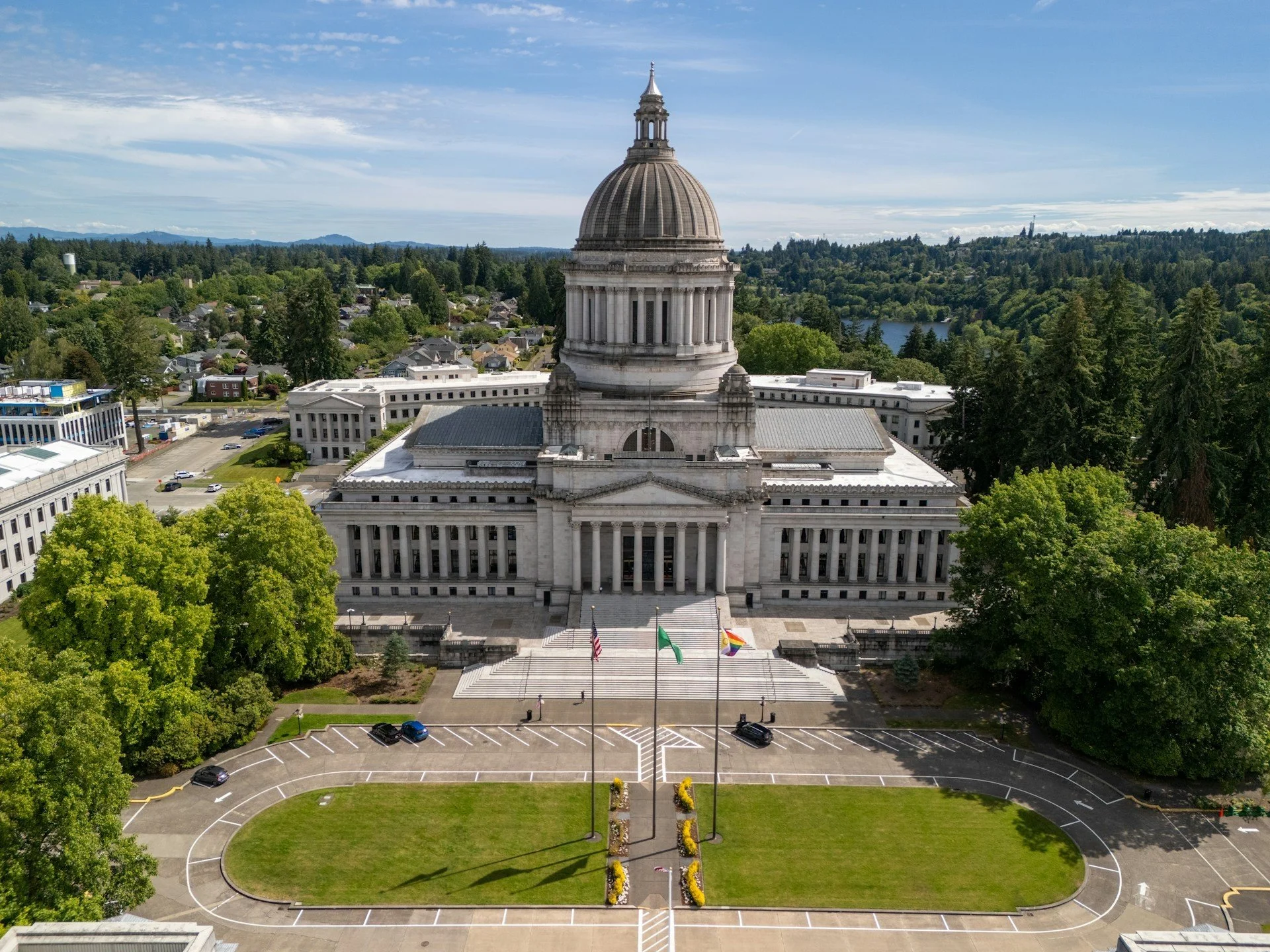
A 7th Grader, a Tiffany Chandelier, and a Live Senate Session: What a Capitol Field Trip Taught Me About the Eastside
It Started Before We Even Walked Through the Doors
The moment the bus pulled up to the Washington State Capitol in Olympia, every phone came out. No one had to say a word. The students just looked up — up at the dome, up at the columns, up at the sheer scale of a building they had only ever seen in textbooks.
That spontaneous reaction — pure, unscripted awe — set the tone for everything that followed.
My name is Freddy Delgadillo. I'm a luxury real estate advisor with Judah Realty and Realogics Sotheby's International Realty, and I've spent years serving families across Bellevue, Kirkland, Redmond, Sammamish, and Issaquah. This week I traded the office for something more important: a chaperone badge and a day with my son Levi's Cedar Park Christian School 7th grade class at the Washington State Capitol.
What I experienced reminded me of something I already believe but don't always say out loud: the best reason to plant roots on the Eastside isn't square footage. It's the community that comes with it.
Kids Who Were Already Paying Attention
Before we stepped inside, I overheard two students talking. One had been given a mission by his mom — "Tell the governor to lower the taxes and stop taxing us." Half-joking, but only half. Another had sat down with his dad the night before to look up the national deficit and was genuinely thinking about what it meant for his generation's future.
These were 7th graders having the kinds of conversations most adults avoid.
And they weren't wrong to be curious. The very legislators we watched debate in the Senate chamber that morning are actively moving Washington's proposed "Millionaires Tax" forward — a 9.9% income tax on annual income above $1 million that the State Senate passed 27-22 on February 16, 2026, and that is now working through the House. https://washingtonstatestandard.com/2026/02/16/washington-state-senate-approves-tax-on-personal-income-over-1m/ Whether you support it or not, it is real, it is active, and it is being decided right now in the same building where Cedar Park Christian's 7th grade class sat in the gallery.
For Eastside homeowners and investors following this closely: the sale of real estate is currently exempt under the proposed bill. Worth knowing. Worth watching.
Meeting a Lawmaker Who Made a Difference
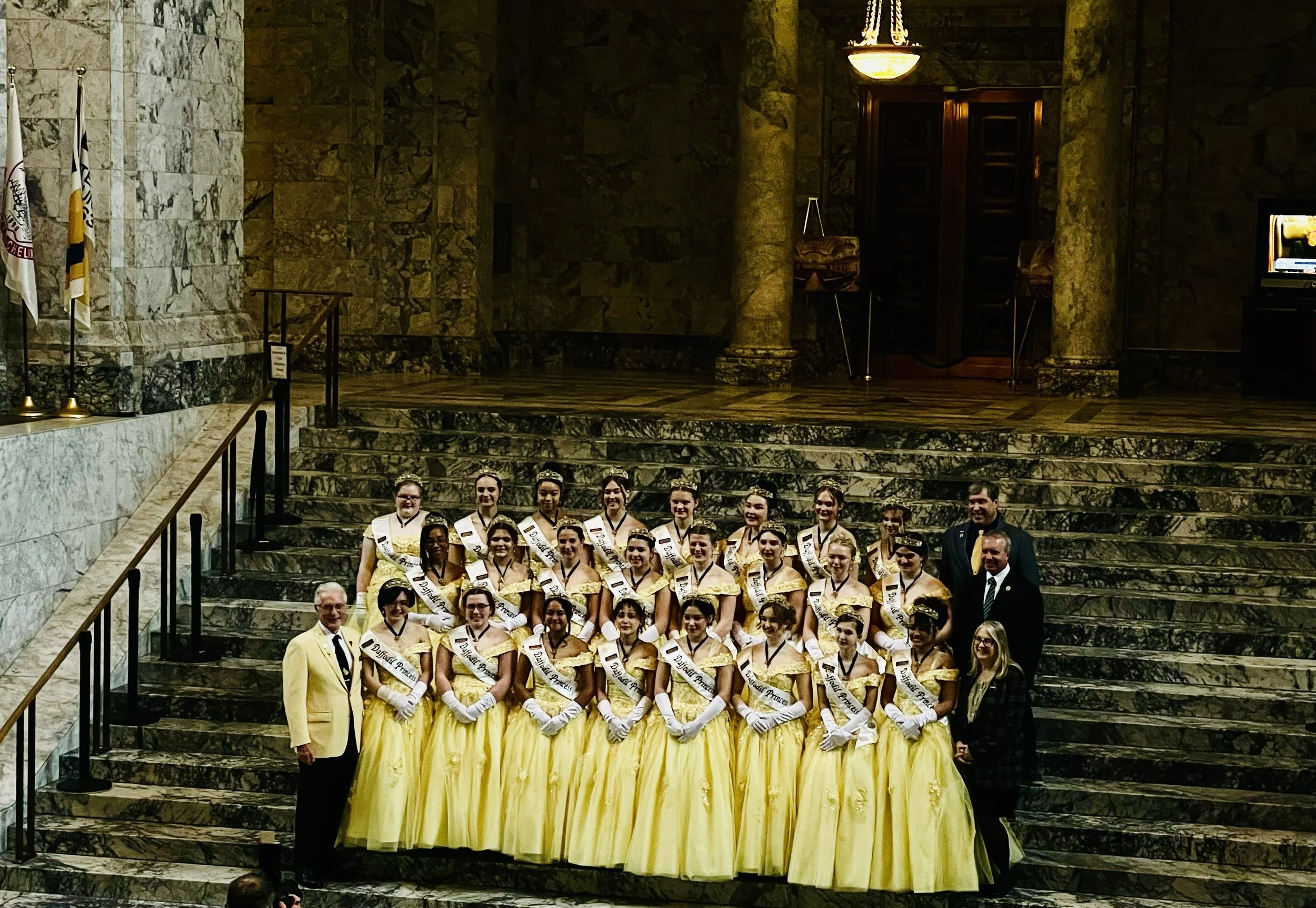
Right before the Senate session began, something unplanned happened. Our tour guide introduced us to State Representative Steve Bergquist, who had come to greet the Thurston County Daffodil Princesses — also there that day — and took a few minutes to speak with our group.
I had one question: "What bill have you passed that you'll be remembered for?"
His answer was immediate and clear — the Renton Promise. Legislation he created in partnership with Renton Technical College and Renton School District that allows every Renton School District graduate to attend Renton Technical College tuition-free for up to two years after high school, regardless of GPA, income, ability, or country of birth. No barriers. No fine print. https://www.rentonschools.us/learning-and-teaching/secondary-education/renton-promise-free-college-at-renton-technical-college
As a Board Trustee at Northwest University, that conversation lit something up for me. The Renton Promise model is genuinely powerful — and it raised an important question I haven't stopped thinking about: could a similar structure be extended to private and faith-based institutions? Community college access is meaningful, but for students called to a faith-based education — institutions like Cascadia Community College in Bothell or even Northwest University — the door remains largely closed.
Rep. Bergquist mentioned he would be open to talking with the Bothell/Kirkland representative about exploring similar pathways through Cascadia. I hope Cedar Park Christian is part of that conversation too. These are the kinds of policy discussions that shape the futures of Eastside families for generations.
A Senate in Session and a Field of Flowers
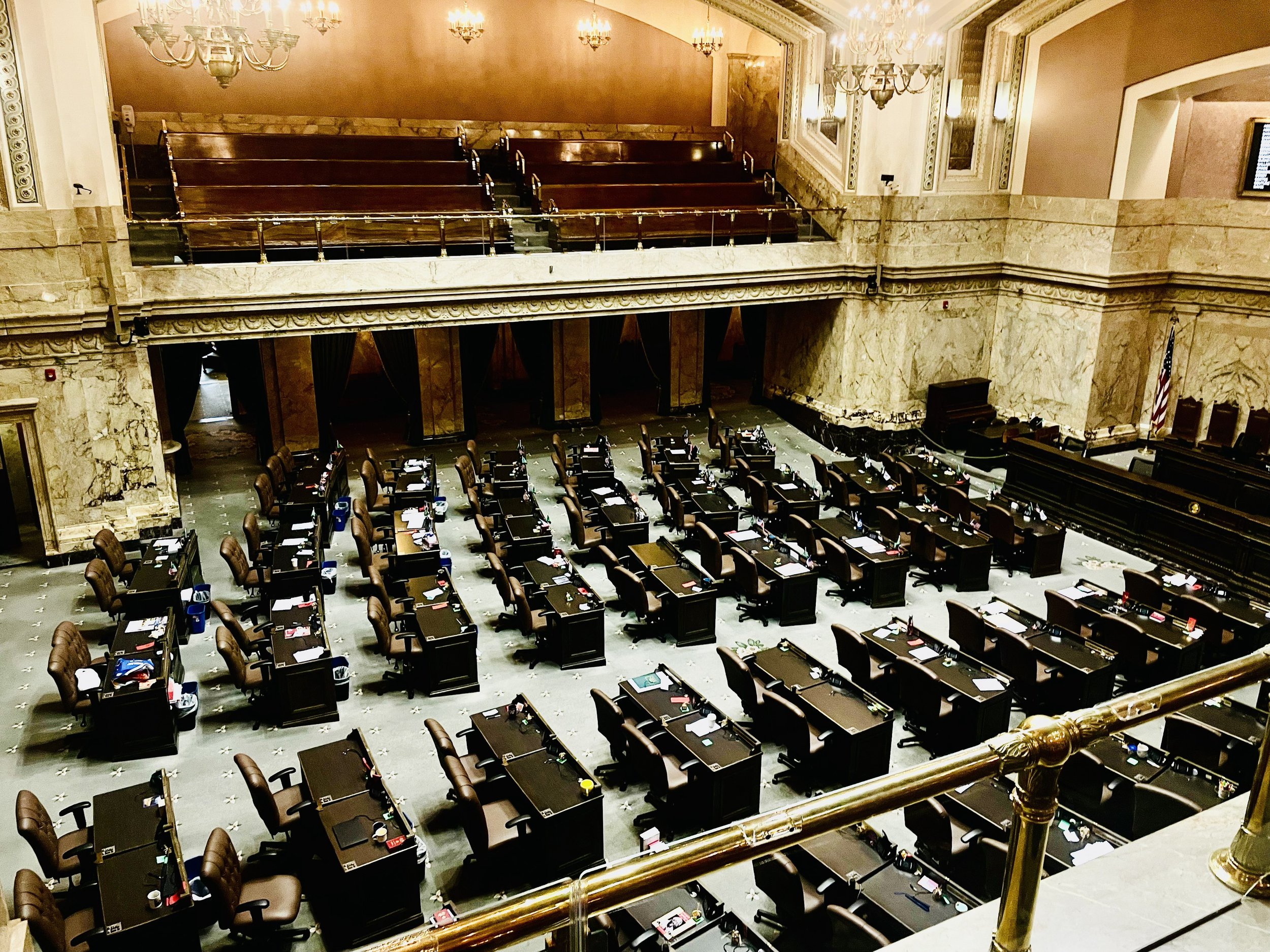
We sat in the gallery of the Washington State Senate and watched the actual legislative process unfold. Real lawmakers. Real debate. Real decisions being made — not a simulation, not a video.
Seated beside us in the gallery were the Thurston County Daffodil Princesses, who were visiting Olympia for their own ceremony. It was one of those only-in-Washington moments — 7th graders from the Eastside, surrounded by history, watching their state government at work while daffodil royalty sat nearby. You can't plan that. https://thedaffodilfestival.org/royalty/
The House of Representatives was not in session when we visited, but the chamber itself was open — and the architecture alone was worth standing still for. Every detail in that building was built to communicate something: this matters, this is permanent, this belongs to the people.
1893 Blüthner grand piano in the Washington State Capitol Reception Room donated by Dr. Hans Moldenhauer
The Room That Has Hosted Royalty
Before the Senate session, we were taken into a private reception room that most visitors never see. It has hosted international dignitaries — including the Prince of Norway. On the wall hangs the only framed state flag bearing 42 stars, a piece of American history from a specific and narrow window of time.
And in the corner, quiet and beautiful, sat a 1893 Blüthner grand piano.
This instrument has a story that belongs in a novel. Built in Leipzig, Germany, it became the beloved possession of Dr. Hans Moldenhauer — a renowned Spokane-based musicologist and one of the most significant music scholars of the 20th century. The piano traveled with his family from Germany to New York and eventually to Spokane, where it lived in his home for nearly 50 years. In 1990, his estate donated it to the Washington State Capitol. It was carefully restored by Spokane piano technician Ken Eschete in 2017 after suffering damage, and today it sits in the State Reception Room as a prized piece of Washington history, used for performances and ceremonies.
Two of our Cedar Park Christian students sat down and played it. https://www.theolympian.com/news/politics-government/article312519925.html
In a room that has hosted heads of state and royalty, two Eastside 7th graders played a 130-year-old German grand piano. That is the kind of moment a field trip is supposed to create, and one they will carry for the rest of their lives.
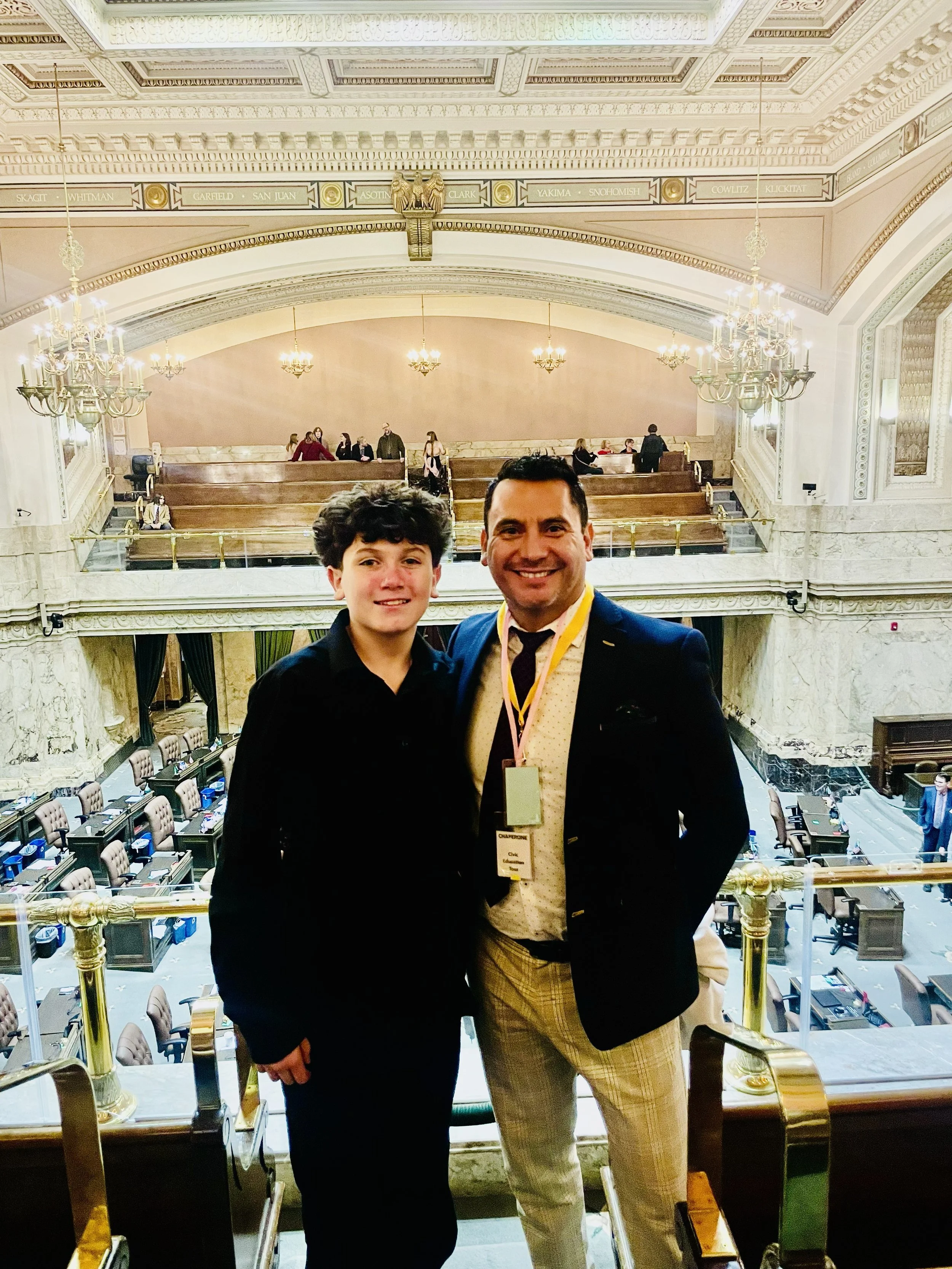
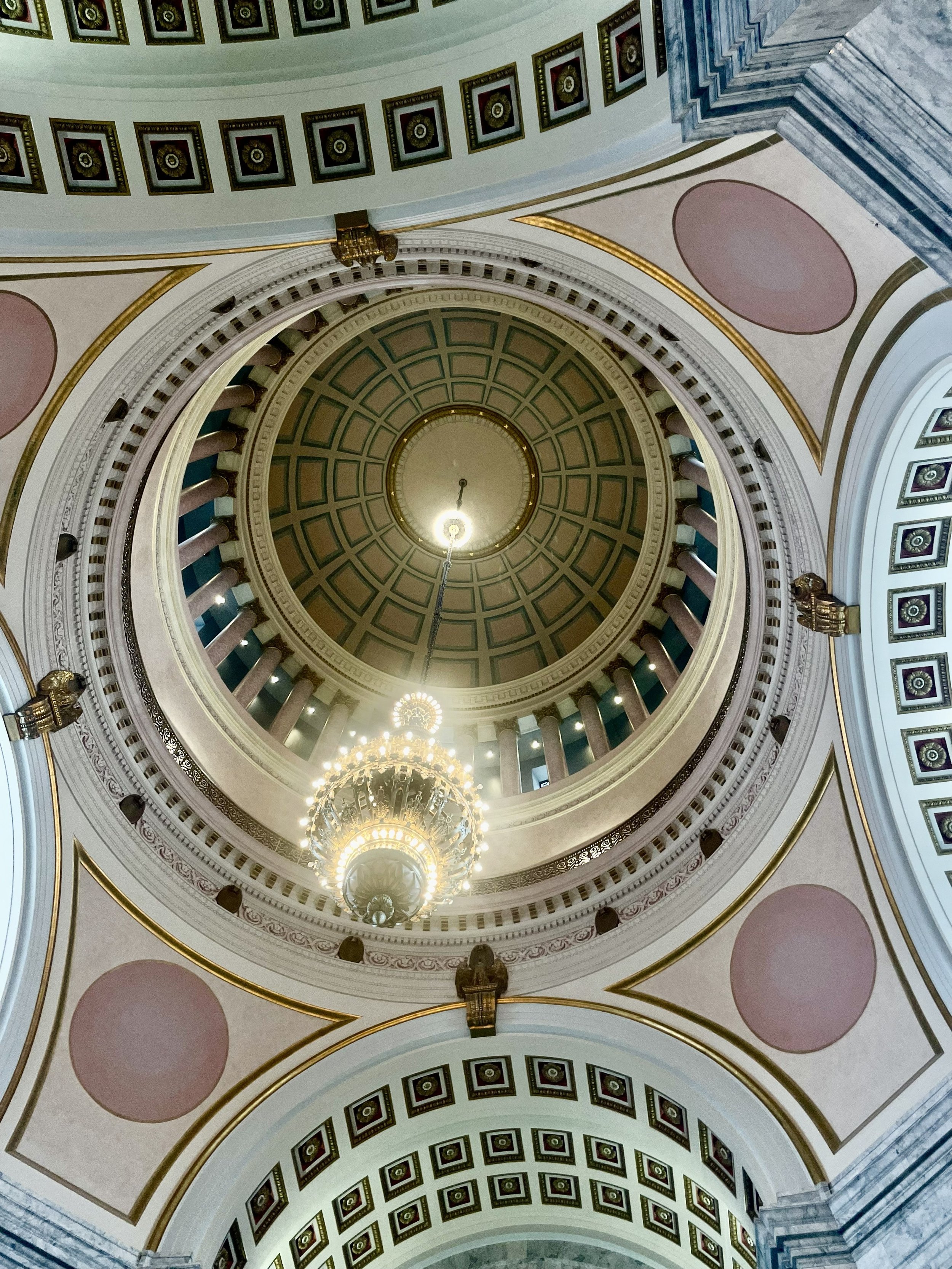

The Rotunda: Where History Becomes Real
We finished the tour in the Capitol rotunda, and our guide delivered the kind of facts that make history impossible to forget.
The chandelier hanging above us was made by Tiffany & Co. — and it is the largest chandelier they have ever created. The detail that stopped everyone mid-step: the torch of the Statue of Liberty would fit perfectly in the space between the state seal on the rotunda floor and the bottom of the chandelier. The earthquake of 2001 was powerful enough to send that chandelier swaying back and forth.
The marble surrounding the rotunda came largely from quarries in Alaska, giving the space a weight and permanence that's hard to put into words until you're standing inside it.
The Roman pots lining the rotunda carry a tradition from ancient Rome — when the Senate was in session, pots were lit with fire as a public signal. Today, the Capitol uses electric lights. Same intention. Two thousand years apart.
The state seal — the image of George Washington that appears on everything from official documents to the Capitol floor — was also explained in full. The seal tells a story of Washington's identity, its values, and its place in the nation.

The Appellate Courtroom: Levi's Favorite Part
This was the moment of the day.
Our guide brought the entire group into the appellate courtroom — the room where Washington's nine appellate judges hear the state's most consequential cases. Nine elevated seats. Wood paneling. The weight of every significant legal decision the state has ever made contained in one room.
Then she put the students to work.
The case: Lumis vs. Gardner. The outcome: the establishment of Washington's Good Samaritan Law — the legal protection that allows people to seek emergency help without fear of criminal penalty. https://archive.seattletimes.com/archive/19960404/2322517/guard-who-left-truck-to-save-life-wins-ruling https://www.spokesman.com/stories/1995/jun/16/judge-blasts-armored-car-firm-for-firing-hero/
The students argued. They questioned. They disagreed. For the first time, they weren't reading about law — they were inside the room where law is made and interpreted, playing out a real case that changed real lives.
Levi said it best when we got back to the bus: "Coming to the state capitol and seeing the building, the stories, and how government works helped me understand what my teacher was explaining. I really enjoyed the field trip."
That's the sentence that made the whole day worth every minute.
Full Circle at the End of the Day
That evening, Levi and I sat down together and watched President Trump's State of the Union address. After a day inside Washington's Capitol, watching the national address felt different. He had context now. He had questions. We talked about taxes, about the deficit, about what government does and doesn't do, and about what it means to live in a country where 7th graders can walk into the Senate gallery and watch it all happen.
That's civic education. And it happened naturally, not by assignment.
Why This Matters to Eastside Families
I've spent years helping families make one of the most significant decisions of their lives — where to put down roots. And in all that time, the thing that has never changed is this: people choose the Eastside because of community.
Not just the schools, though the schools matter deeply. Not just the natural beauty, though Lake Washington and the Cascade foothills are extraordinary. It's the fact that state representatives stop to talk to 7th graders before a Senate session. It's that field trips still happen. It's that parents show up as chaperones, and kids come home asking better questions than when they left.
That's what you're investing in when you choose Bellevue, Kirkland, Redmond, Sammamish, or Issaquah.
And as someone who is not just a real estate advisor but a Board Trustee at Northwest University, a DECA judge, a school volunteer, and now a Capitol chaperone — I'm grateful to be part of it.
Thinking About the Eastside for Your Family?
Whether you're relocating, upsizing, or simply beginning to explore, I'd love to have a real conversation — not just about the market, but about the community.
📞 425-941-8688
📧 freddy@judahrealty.com
🌐 judahrealty.com/eastside-waterfront-homes
Freddy Delgaldillo | Judah Realty | Realogics Sotheby's International Realty | CLHMS Certified