
7 Mistakes Eastside Waterfront Buyers Make (And How to Avoid Them).
7 Mistakes Eastside Waterfront Buyers Make (And How to Avoid Them)

Waterfront property on the Eastside is some of the most sought-after real estate in the Pacific Northwest. Lake Washington frontage in Bellevue, Kirkland, Issaquah, Sammamish and Mercer Island is structurally scarce — there is simply no more of it to create. When a property comes to market, qualified buyers move fast.
But in my 25+ years as a waterfront real estate agent on the Eastside, I have watched buyer after buyer make the same preventable mistakes. Some cost them thousands in unexpected expenses after closing. Some cost them the property entirely. A few have cost buyers both.
This post is the guide I hope every waterfront buyer reads before making a decision to purchase a waterfront home. Whether you are beginning your search or actively making offers, these are the seven mistakes you need to know — and exactly how to avoid them.
This is the first mistake buyers make and the one that causes the most confusion later. "Eastside waterfront" is not a single market. It is four or five distinct markets that happen to share the same geographic label.
Lake Washington frontage in Bellevue, Kirkland, and Mercer Island carries the highest price per foot in the region — and for good reason. Deep water, private moorage, Seattle skyline views, and proximity to Eastside employment centers make it irreplaceable. Lake Sammamish frontage offers a quieter, more residential feel with different regulations and a different buyer demographic. River frontage and smaller lake properties carry different water rights, dock rules, and price dynamics entirely.
A buyer who shops all of these simultaneously without understanding the differences will misjudge value at every turn. A $3.5M Bellevue waterfront and a $3.5M Lake Sammamish waterfront are not comparable properties — they serve different lifestyles and will perform differently over time.
A standard home inspection is not sufficient for a waterfront property. Full stop.
The most expensive components of a waterfront home are often below the waterline — and a general home inspector is not trained to evaluate them. Bulkheads, which hold the shoreline in place and can cost $200,000 to $500,000+ to replace, require a structural or geotechnical engineer to assess properly. Docks, pilings, boat lifts, and floats deteriorate from marine exposure in ways that are invisible from a standard walkthrough.
I have seen buyers close on properties with bulkhead failures that were not caught because they used a general inspector. The repair bill arrived within two years of closing and was not covered by any insurance.
A private dock is one of the most desirable features of Eastside waterfront ownership. It is also one of the most consistently underestimated ongoing expenses.
Beyond the purchase price, dock ownership on Lake Washington involves annual maintenance — cleaning, minor hardware replacement, seasonal preparation. Any structural modifications or repairs require a Washington State Shoreline Permit, which involves application time and fees. Boat lifts require servicing. If the property is in an HOA, there may be dock association fees on top of individual maintenance. And marine insurance for the dock structure itself adds another annual line item.
A full dock rebuild — which becomes necessary every 20–30 years depending on construction quality — can run $50,000 to $250,000 or more depending on size and materials. Buyers who do not ask about dock age and condition during due diligence sometimes inherit a structure that is five years from a major capital project.
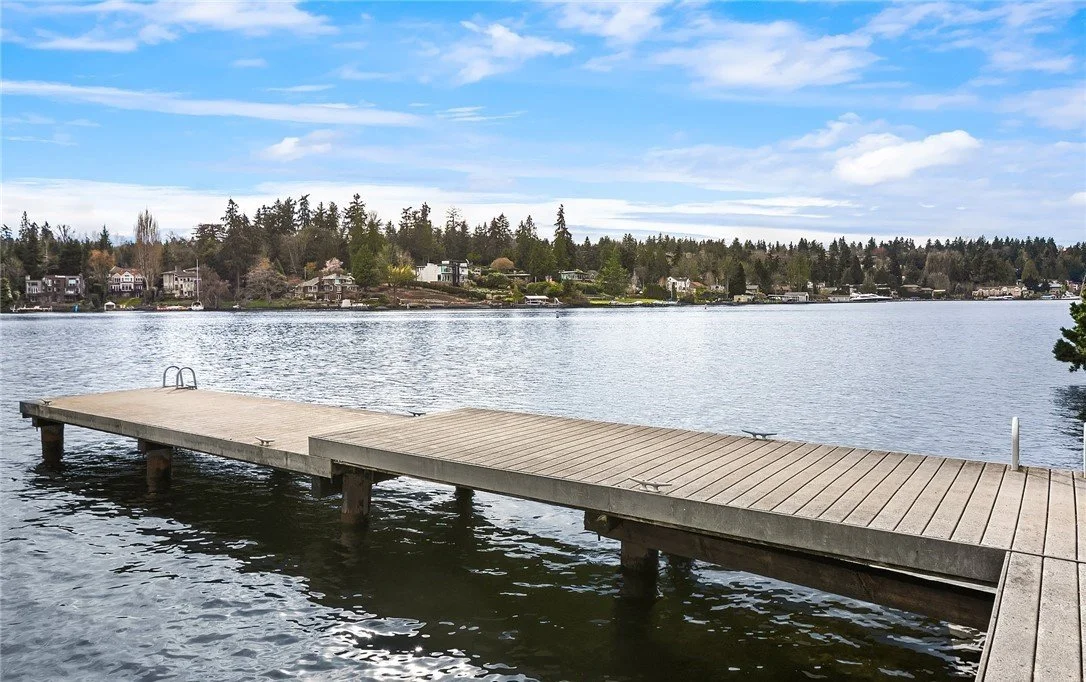
Washington's Shoreline Management Act (SMA) is one of the most consequential pieces of legislation that Eastside waterfront buyers rarely read before closing. It governs what you can build, modify, expand, or add within the shoreline jurisdiction — typically the first 200 feet from the ordinary high water mark.
This directly affects your ability to add a dock or expand an existing one, modify a bulkhead, add a guest house, build a deck toward the water, or landscape the shoreline strip. In some jurisdictions, even removing vegetation near the waterline requires a permit. Rules vary between King County, the City of Bellevue, the City of Kirkland, and the City of Issaquah — each has its own Shoreline Master Program layered on top of the state act.
Buyers who purchase waterfront with the intention of adding a dock, expanding the dock, or building a water-adjacent structure sometimes discover after closing that their plans are not permitted — or require a multi-year permitting process with uncertain outcomes.
Price per waterfront foot is the metric most buyers default to when comparing properties. It is a useful starting point. It is a dangerous endpoint.
Two properties at the same price per waterfront foot can deliver completely different daily experiences — and will perform very differently at resale. Sun orientation determines whether your deck gets afternoon light or sits in shadow. Wake exposure from boat traffic affects how usable the dock is and how much erosion the shoreline sustains over time. Water depth at the dock determines what kind of boat you can moor. Privacy from neighboring properties, views toward Seattle versus views toward the opposite shoreline, and noise from nearby bridges or parks all factor into long-term livability in ways that price per foot cannot capture.
Buyers who optimize for price per foot sometimes win on paper and lose in practice — they own the waterfront but do not enjoy it the way they expected.
— Freddy Delgadillo, Judah Realty | Realogics Sotheby's International Realty
Waterfront real estate negotiation is its own discipline. The comparable sales pool is thin — there are never dozens of recent comps to anchor pricing. Condition variables like bulkhead age, dock quality, shoreline erosion, and permit history all affect value in ways that a general real estate agent may not know how to quantify or argue in your favor during negotiations.
On the listing side, this matters equally. A seller working with a non-specialist may overprice based on emotion — or underprice because their agent does not know how to position waterfront-specific features to the right buyer pool. Either scenario costs money.
I have represented buyers who came to me after a previous offer fell apart because their agent did not know how to structure the waterfront inspection contingency properly. By the time the deal collapsed and they came back, the property had received another offer.
This is the mistake buyers only fully understand after they experience it once — and they rarely get a second chance with the same property.
Eastside waterfront inventory is structurally constrained in a way no other real estate category is. You cannot build more Lake Washington shoreline. Bellevue, Kirkland, and Mercer Island waterfront properties are held by owners who, in many cases, have lived there for decades and will not sell again for years after closing. When a property comes to market that meets your criteria — the right location, the right sun orientation, the right dock, the right home — it will attract other qualified buyers who have been waiting just as long as you have.
Hesitation in a thin-inventory market is not caution. It is cost. Buyers who ask for a week to think after a showing without making an offer regularly find that another buyer who had done their preparation moved faster. That property may not return to market for five to ten years.
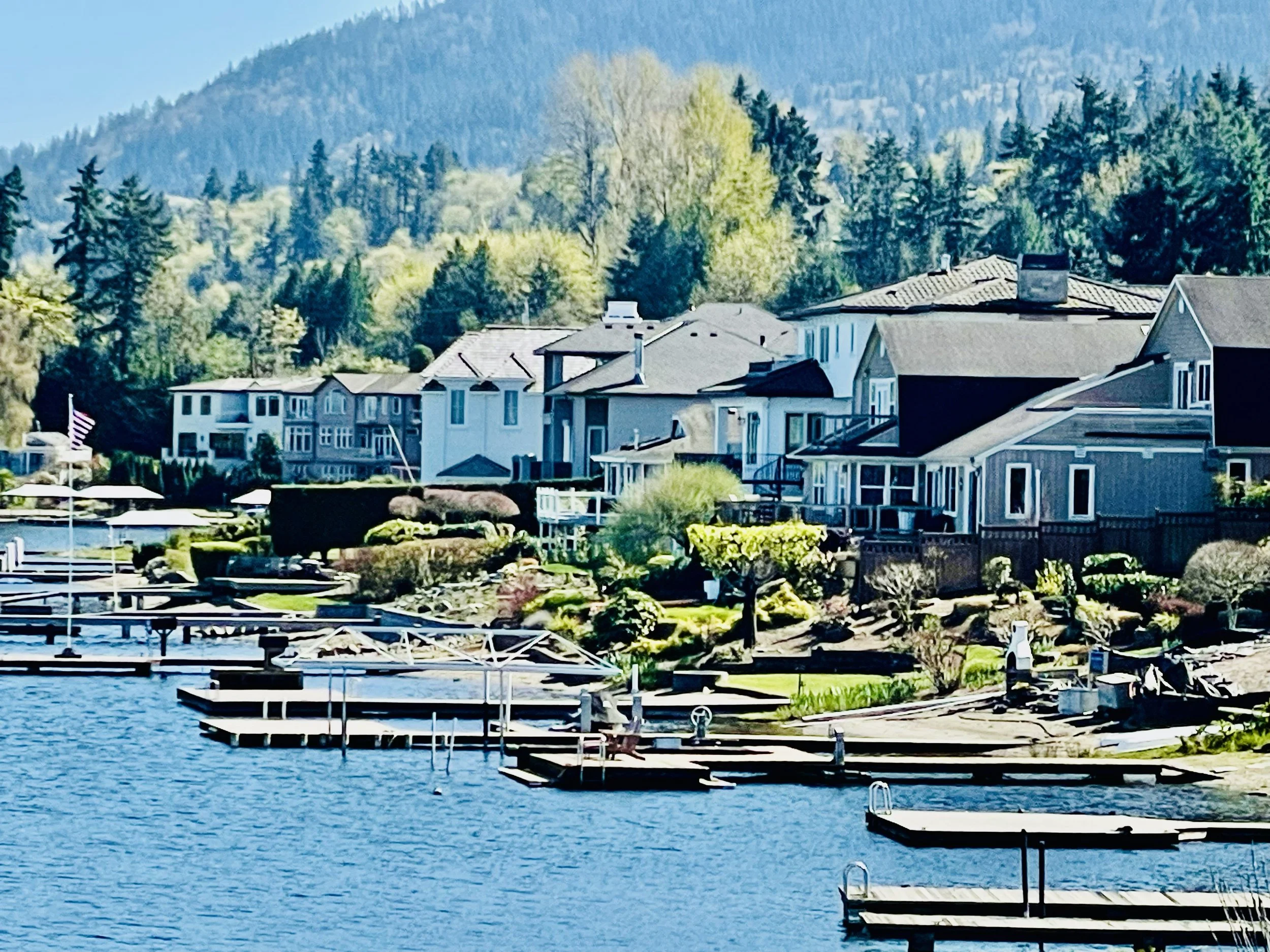
- Know the difference between Eastside waterfront markets before you begin comparing properties.
- Budget for two inspections — standard and waterfront-specialized — on every property you get serious about.
- Understand the full annual cost of dock ownership before you fall in love with a property that has one.
- Confirm shoreline regulations for any improvements you plan to make, before closing — not after.
- Visit properties at multiple times of day and evaluate the experience, not just the price per foot.
- Choose a waterfront specialist with a verified transaction history on the Eastside, not a generalist who happens to be available.
- Be ready to move when the right property appears — preparation before the listing, not after.

Ready to Buy or Sell Eastside Waterfront?
25+ years. 500+ transactions. Specialist in Bellevue, Kirkland, Mercer Island, Lake Sammamish, and Issaquah waterfront properties. As your waterfront real estate agent, I help you avoid every mistake on this list — before it costs you.
Browse active waterfront listings across all five Eastside markets below.
Information and statistics compiled and reported by the Northwest Multiple Listing Service. Waterfront market data references the Realogics Sotheby's International Realty 2025 Waterfront Market Report. Freddy Delgadillo is a licensed real estate broker at Judah Realty | Realogics Sotheby's International Realty, specializing in Eastside Washington luxury and waterfront properties. Contact: (425) 941-8688 | freddy@judahrealty.com