
Fed Raises Rates 25 Basis Points: What It Means for Eastside Real Estate
The Fed Just Raised Rates for the First Time Since 2023 — Here's What It Actually Means for You
📈 Market Intelligence
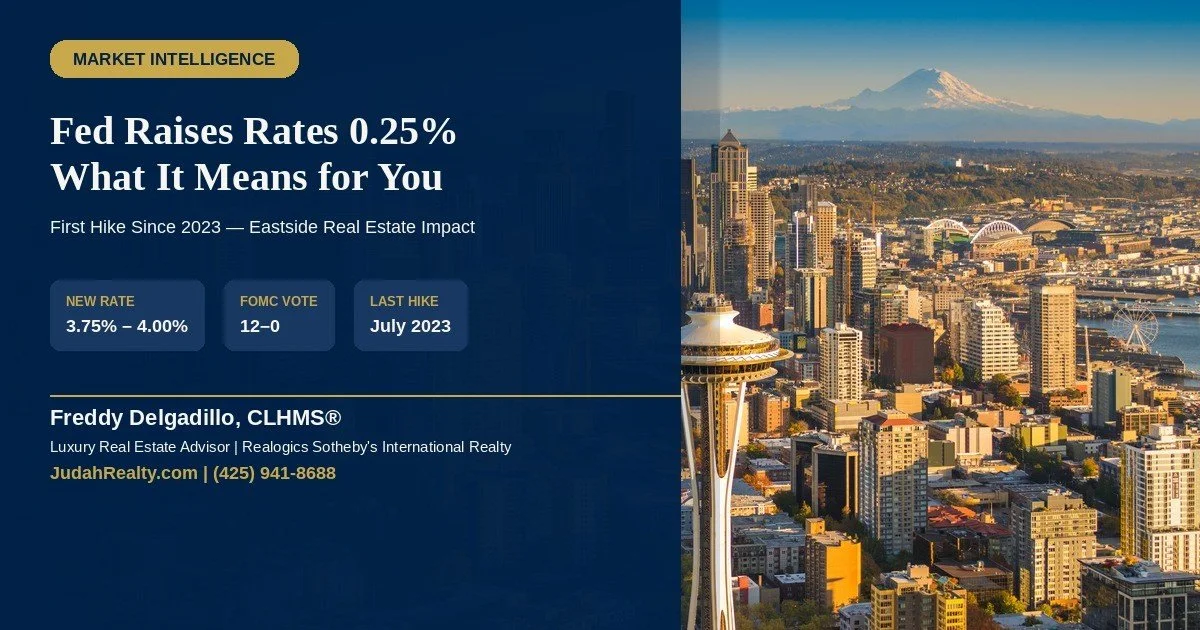
The Federal Reserve raised interest rates by 25 basis points on September 16, 2026, bringing the federal funds rate to a target range of 3.75%–4.00% — the first increase since July 2023. This does not translate into an equivalent mortgage rate increase; the federal funds rate is a short-term bank lending rate, while mortgage rates track longer-term bond yields and inflation expectations. That said, this decision continues a rate trend already working against buyer affordability throughout 2026, and it signals the Fed anticipates at least one more increase before year-end.
The First Hike in Three Years
On September 16, the Federal Open Market Committee voted unanimously, 12-0, to raise the federal funds rate by a quarter point to a target range of 3.75%–4.00%. This ends a run of held rates that had persisted since the Fed's last increase in July 2023, and it comes as officials cited persistently elevated inflation, driven in part by higher energy prices, as their primary concern. The Fed's updated projections, released alongside the decision, suggest committee members see room for at least one more rate increase before the end of 2026, with year-end target estimates ranging from 4.1% to 4.4%. This marks a genuine shift in posture after years of a more accommodative stance.
Why This Doesn't Mean What Most Headlines Will Imply
Here's the distinction worth understanding before you assume your next mortgage quote just jumped a quarter point: the federal funds rate and mortgage rates are not the same thing, and they don't move in lockstep. The federal funds rate governs short-term, overnight lending between banks. Mortgage rates, by contrast, are priced off the bond market — most closely tracking 10-year Treasury yields — and are driven primarily by inflation expectations and investor demand for mortgage-backed securities, not the Fed's overnight rate directly. In practice, this means a well-anticipated Fed move like this one, priced by markets at roughly 93% probability beforehand, often has already been partially absorbed into mortgage rates before the announcement itself. The more important signal isn't the 25 basis points — it's what the decision tells us about the Fed's trajectory. A committee that just ended a three-year pause and is projecting further increases is signaling a tightening bias, and that bias affects the inflation expectations baked into long-term rates over time.
What This Means for the Eastside Right Now
This decision doesn't arrive in a vacuum. Our own Monthly Eastside Market Advisory series has tracked mortgage rates climbing steadily through 2026 — from an average of 6.1% in Q1, to 6.4% by Q2, to over 6.5% by July. This Fed decision continues that trajectory rather than reversing it, and buyers should plan financing around rates holding firm or drifting higher in the near term rather than expecting relief. For sellers, this is one more data point reinforcing what August's market advisory already showed: elevated financing costs remain a headwind on buyer demand, contributing to the inventory growth and buyer leverage we've documented across most Eastside submarkets this year. Pricing strategy needs to account for a rate environment that isn't easing, not one that's about to.
Frequently Asked Questions
Did the Federal Reserve raise interest rates in September 2026?
Yes. On September 16, 2026, the Federal Open Market Committee voted 12-0 to raise the federal funds rate by 25 basis points to a target range of 3.75% to 4.00%. This was the Fed's first rate increase since July 2023, ending a multi-meeting pause.
Does a Fed rate hike directly raise mortgage rates?
Not directly or one-to-one. The federal funds rate is a short-term overnight lending rate between banks. Mortgage rates track the bond market, particularly 10-year Treasury yields, and are influenced by inflation expectations, not the federal funds rate itself. However, Fed policy direction affects those broader expectations, and a hike that signals more tightening ahead can push longer-term rates up even if the immediate mortgage rate move is modest.
Why did the Fed raise rates instead of cutting them?
The Fed cited persistently elevated inflation, driven in part by higher energy prices, as the primary reason for the increase. Fed officials' projections indicate they see the hike as necessary to support a timelier return to their 2% inflation goal, and their updated dot plot suggests at least one more rate increase is possible before the end of 2026.
How does this rate hike affect Eastside home buyers and sellers?
This hike continues a rate trend that has already been moving against buyer affordability through 2026, with mortgage rates rising from an average of 6.1% in Q1 to over 6.5% by July. Buyers should expect financing costs to remain a headwind rather than an easing factor in the near term. Sellers should recognize that continued rate pressure is one of several factors keeping Eastside inventory elevated and giving buyers negotiating leverage across most submarkets tracked in our Monthly Eastside Market Advisory series.

Rate Headlines Shouldn't Drive Your Decisions Alone
Whether you're timing a purchase or pricing a sale, let's talk about what this actually changes for your specific situation — not just what the headlines say.